Quick Answer: ECHR Meaning
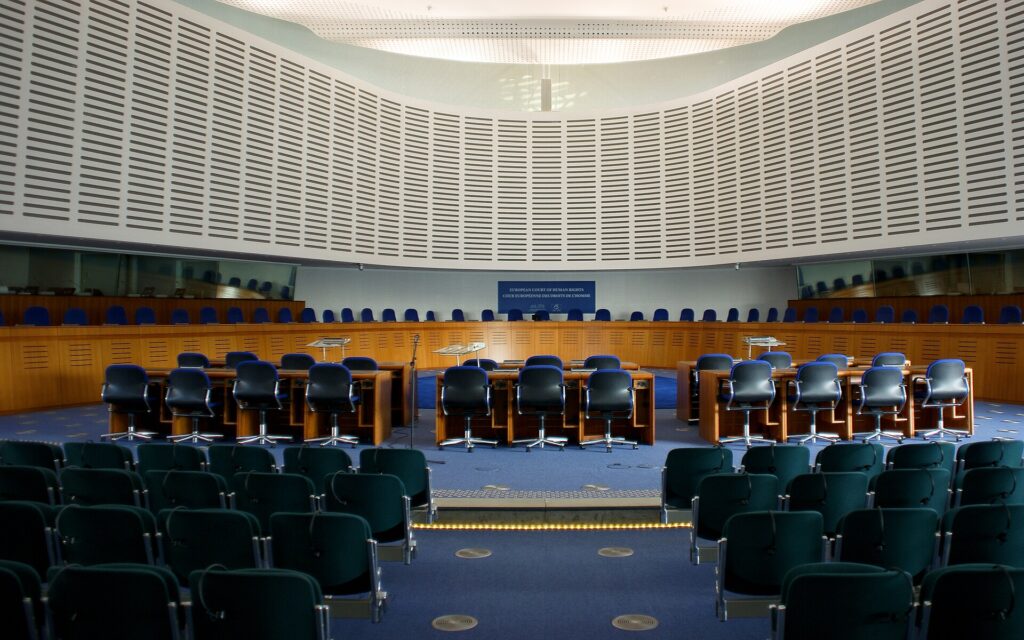
ECHR stands for the European Convention on Human Rights — an international treaty signed in 1950 by the Council of Europe that protects fundamental rights for over 700 million people across 46 member states. It is enforced by the European Court of Human Rights (ECtHR) in Strasbourg, France.
What Does ECHR Stand For?
The ECHR full form is the European Convention on Human Rights. Its official title is the “Convention for the Protection of Human Rights and Fundamental Freedoms.” When people ask “what does ECHR stand for,” the answer is this landmark treaty that established legally binding human rights protections across Europe. The abbreviation ECHR stand for is used both for the Convention itself and, informally, for the European Court of Human Rights (more precisely abbreviated as ECtHR).
Drafted in 1950 by the Council of Europe and entering into force in 1953, the ECHR is one of the most influential human rights instruments in the world. It created the first international court allowing individuals — not just states — to bring human rights claims against their own governments.
ECHR Key Historical Timeline
| Year | Event | Significance |
|---|---|---|
| 1949 | Council of Europe founded | The political organisation that would draft and oversee the ECHR |
| 4 November 1950 | ECHR signed in Rome | Original 12 member states signed the Convention |
| 3 September 1953 | ECHR entered into force | Became binding international law after 10 ratifications |
| 1959 | European Court of Human Rights established | The judicial body created to enforce the Convention |
| 1 November 1998 | Protocol 11 restructured the Court | Created the full-time permanent Court replacing the Commission |
| 2014 | Protocol 15 adopted | Strengthened the subsidiarity principle and added 4-month time limit |
| 2022 | Russia expelled from Council of Europe | Following the invasion of Ukraine; Russia removed from ECHR jurisdiction |
Understanding the ECHR: Meaning and Scope
The ECHR meaning goes far beyond a simple abbreviation. The Convention represents a transformative commitment by European states to uphold fundamental human rights and allow citizens to hold their governments accountable in an international court. Since its creation, the Convention has been ratified by all 46 Council of Europe member states, covering over 700 million people.
The ECHR is distinct from European Union law. The Council of Europe — the organisation behind the ECHR — is a separate institution from the EU and includes non-EU countries such as Turkey, Ukraine, and Georgia. This means that even after Brexit, the United Kingdom remained subject to the ECHR until any future withdrawal.
How the ECHR Protects Your Rights
The Convention operates on the principle of subsidiarity: national courts are the primary guardians of human rights, and the Strasbourg Court acts as the final backstop. An individual can bring a case to the European Court of Human Rights only after exhausting all effective domestic remedies and within four months of the final national decision.
When the Court finds a violation, the judgment is legally binding. The state concerned must pay compensation (just satisfaction) and, in many cases, reform its laws or administrative practices. Execution of judgments is supervised by the Committee of Ministers of the Council of Europe.
Core Rights Protected Under the ECHR
| Article | Right Protected | Key Principle |
|---|---|---|
| Article 2 | Right to Life | State must protect life; death penalty abolished in peacetime (Protocol 6) |
| Article 3 | Prohibition of Torture | Absolute — no exceptions permitted under any circumstances |
| Article 4 | Prohibition of Slavery | Prohibits forced labour and human trafficking |
| Article 5 | Right to Liberty and Security | Limits arbitrary arrest and detention |
| Article 6 | Right to a Fair Trial | Independent tribunal, presumption of innocence, legal representation |
| Article 7 | No Punishment Without Law | No retroactive criminal offences or penalties |
| Article 8 | Right to Private and Family Life | Protects privacy, home, and correspondence |
| Article 9 | Freedom of Thought, Conscience and Religion | Protects religious belief and practice |
| Article 10 | Freedom of Expression | Includes press freedom, artistic expression, and online speech |
| Article 11 | Freedom of Assembly and Association | Right to peaceful protest and to join trade unions |
| Article 12 | Right to Marry | National laws govern exercise of this right |
| Article 13 | Right to an Effective Remedy | Must have recourse to national authority for Convention violations |
| Article 14 | Prohibition of Discrimination | Rights must be enjoyed without discrimination (Protocol 12 extends this) |
The ECHR in History: Why It Matters
The European Convention on Human Rights was born from the devastation of World War II. European leaders recognised that the totalitarian atrocities of the 1930s and 1940s could only be prevented by establishing an international mechanism to hold governments legally accountable for human rights abuses. Sir Winston Churchill was among the earliest advocates for a pan-European human rights court.
The ECHR’s significance lies in several groundbreaking features. First, it was the world’s first regional human rights treaty with a binding enforcement mechanism. Second, it gave individuals direct access to an international court — unprecedented at the time. Third, it established a living instrument doctrine: the Convention is interpreted in light of present-day conditions, meaning its protections evolve with society.
The ECHR as a Living Instrument
Over the decades, the Court has interpreted the Convention to cover issues unforeseeable in 1950. Article 8 (right to private life) now covers environmental rights, data protection, and LGBTQ+ rights. Article 3 has been applied to deportation cases, prison conditions, and domestic violence. This dynamic interpretation is one of the most powerful aspects of the ECHR’s meaning and application today.
ECHR Significance: Impact on European Law
The ECHR has had a profound impact on domestic legal systems across Europe. Many countries — including the United Kingdom through the Human Rights Act 1998, Ireland, and others — have incorporated the Convention directly into national law. This means ECHR rights can be enforced in national courts without the need to go to Strasbourg.
The Court’s judgments have reshaped law in areas including criminal procedure, asylum and immigration, surveillance and intelligence services, LGBTQ+ rights, media freedom, and prisoners’ rights. Landmark cases such as Handyside v. United Kingdom (1976) established the margin of appreciation doctrine, while Pretty v. United Kingdom (2002) explored the limits of the right to die.
How to Bring a Case to the ECHR
If you believe a Council of Europe member state has violated your rights under the Convention, you may be able to bring a case to the European Court of Human Rights. The process requires exhausting domestic remedies first, filing within four months of the final national decision, and meeting admissibility criteria set out in the Convention.
Given the complexity of ECHR proceedings, working with an experienced ECHR lawyer significantly improves your chances of a successful application. Our team specialises in representing clients before the Strasbourg Court in cases involving violations of Articles 3, 5, 6, 8, and 10. Learn more about the functions of the ECHR Court and how it operates.
Frequently Asked Questions About ECHR Meaning
What does ECHR stand for?
ECHR stands for the European Convention on Human Rights — the full form is “Convention for the Protection of Human Rights and Fundamental Freedoms,” adopted in 1950 by the Council of Europe.
Is the ECHR the same as the European Court of Human Rights?
Technically, the ECHR refers to the Convention (the treaty), while the court that enforces it is the European Court of Human Rights (ECtHR). However, “ECHR” is commonly used informally to refer to both the Convention and the Court.
How many countries are bound by the ECHR?
All 46 member states of the Council of Europe have ratified the Convention. Russia was expelled in March 2022 following its invasion of Ukraine.
What is the ECHR full form?
The ECHR full form is “European Convention on Human Rights,” though its official title is the “Convention for the Protection of Human Rights and Fundamental Freedoms.”
Is the EU bound by the ECHR?
The EU itself is not currently a party to the ECHR, but all EU member states are individually bound. The UK remains bound by the ECHR despite Brexit.
How do I use the ECHR to protect my rights?
You must first exhaust all domestic legal remedies in your country, then file an application with the European Court of Human Rights within 4 months of the final domestic decision.
At a glance
| Detail | |
|---|---|
| Convention adopted | 4 November 1950, Rome |
| Entered into force | 3 September 1953 |
| Permanent Court since | 1 November 1998 (Protocol No. 11) |
| States bound | 46 Council of Europe member states |
| Seat of the Court | Strasbourg, France |
| Official languages | English and French |
| Application deadline | 4 months from the final domestic decision |
Think a Convention right has been breached?
If you believe your rights under the European Convention have been violated, our ECHR lawyers can assess your prospects and, if the case is strong, prepare your application. Start by checking the admissibility criteria.